Denormalization Patterns in Columnar DBMS
Columnar engines make denormalization practical when joins become the performance bottleneck.
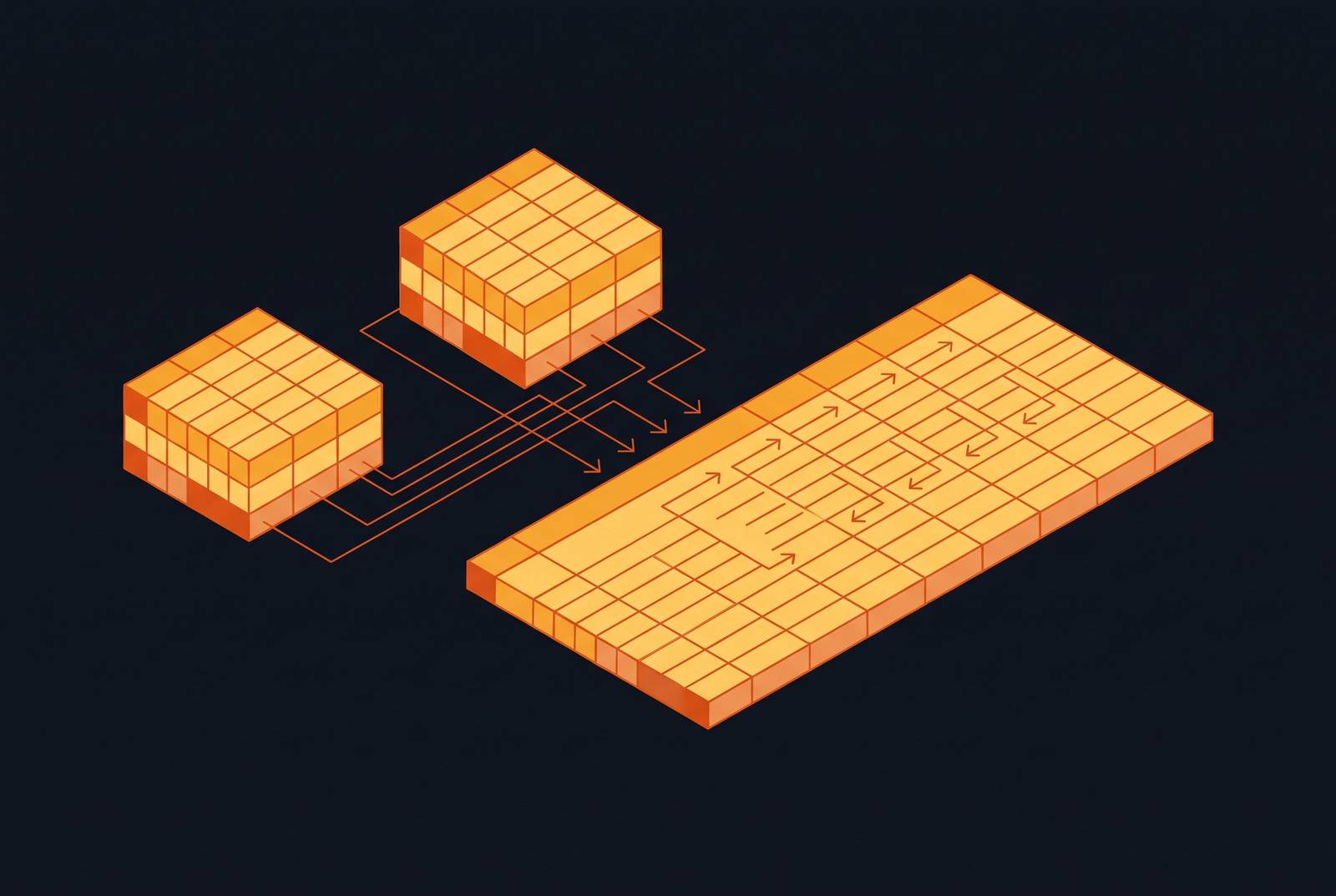
Denormalization in columnar database systems is not the old bargain of spending more storage to avoid joins. Compression and columnar execution make several wide-table patterns practical for analytics at scale. The case for using them, however, rests on a measured bottleneck.
Why the row-store mental model for denormalization no longer applies to columnar engines
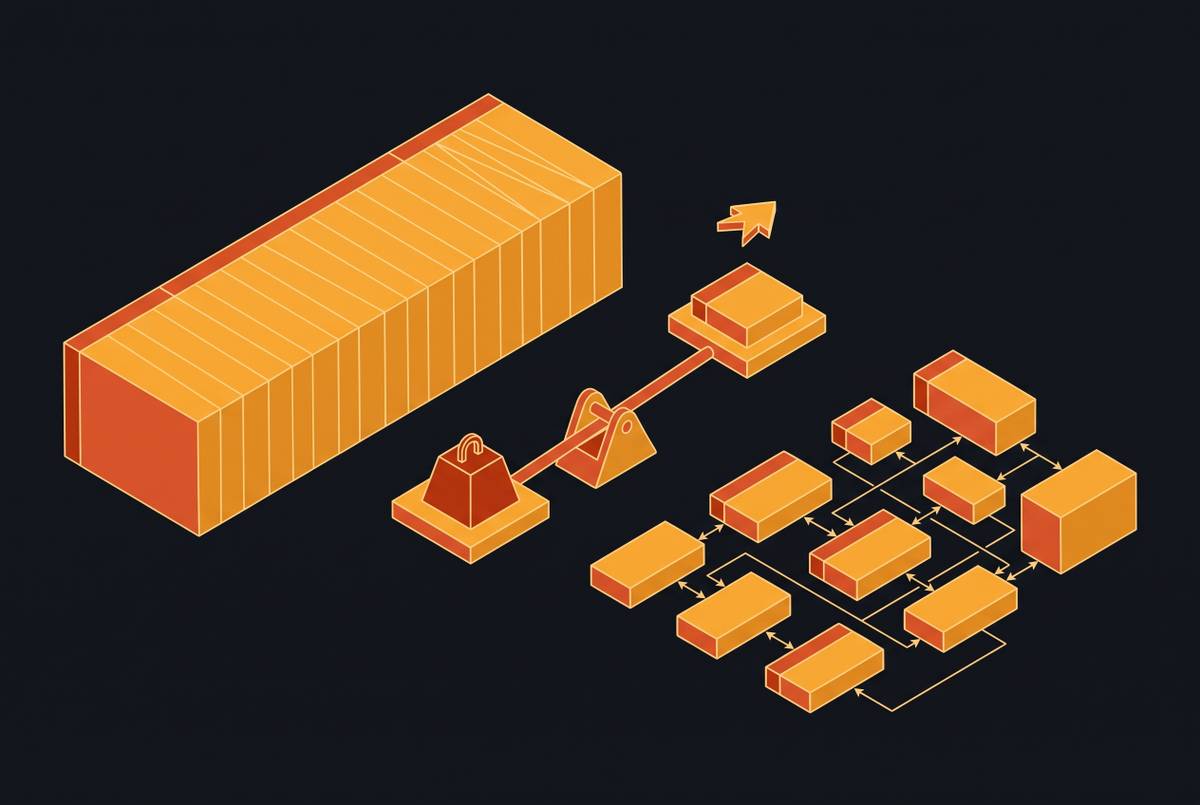
The old objection to denormalization assumes that each repeated value takes up its full width in storage. In the row-oriented model behind that objection, a category string copied across a million product rows takes up space in every row. Putting the category in a separate table removes those copies, but queries must then join the tables to get the original context back. The designer seems to have a simple choice between storing more and joining more. That framing makes sense only while the storage assumptions hold.
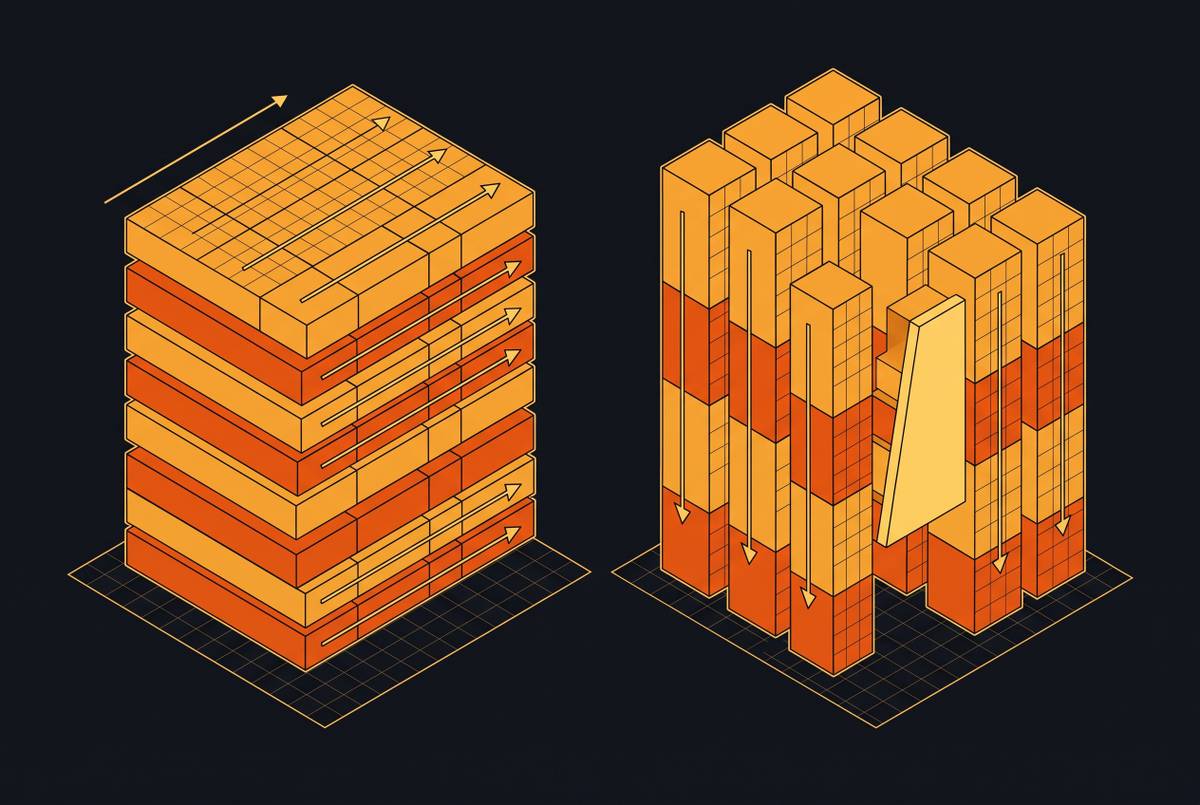
Columnar storage changes those assumptions because it keeps values from the same column together. A stripe of repeated category values compresses far better than the apparent size of the table suggests. The logical schema still contains the repetition, but the physical representation need not pay its full byte cost. A wide table can look wasteful on paper without being costly in the same way on storage.
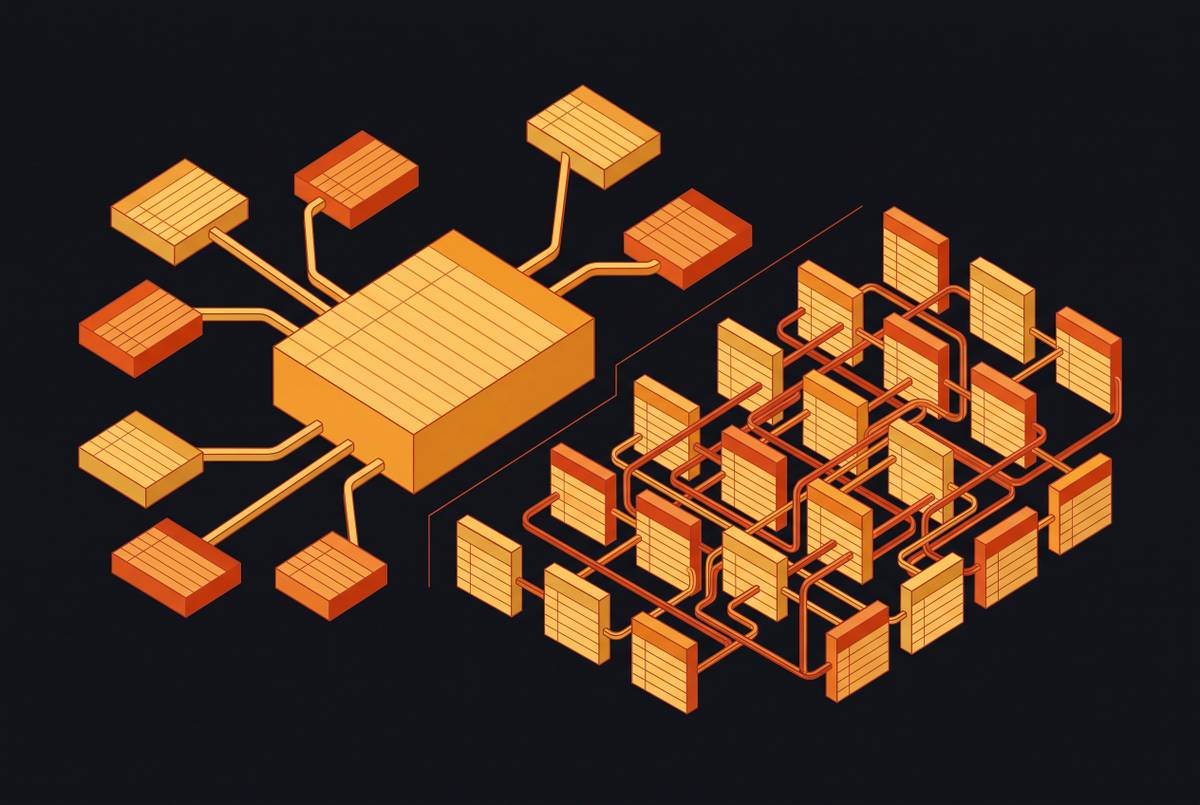
This distinction matters especially for analytical dimensions. Dimension tables are small relative to fact tables, so splitting them further into a snowflake often saves space in an already small part of the warehouse. Queries still have to do the work of following those join chains whenever they need those attributes. Columnar compression weakens the storage argument for that arrangement without removing the join work. The relevant comparison is therefore the physical work performed by the two schema designs.
The columnar mechanics that reprice the denormalization trade-off
Codecs such as LZ4 or ZSTD can make repeated column values extremely compact. But compact storage alone would not make a wide table cheap if every query still had to read and reconstruct every field. The rest of the advantage comes from how the engine selects, filters and processes the data. These operations let a query work on much less than the table’s apparent width.
Column pruning means that a query reads only the column chunks it needs. Picture an orders table with customer_country stored inline rather than reached through a foreign key to a customers table. A query that needs that attribute does not also have to read every other attribute stored on the order. Predicate pushdown complements pruning by applying filters early, reducing data movement before joins or aggregations. The two techniques address different dimensions of the same problem, which are unnecessary columns and unnecessary rows.
Vectorized execution then works on column values in batches, so each row no longer has to pay the same overhead on its own. Late materialization postpones assembling rows until filters have reduced the working dataset. This keeps the engine operating on compressed column data for as long as possible and reconstructing only the rows that survive. Together, these mechanics explain why a sequential scan of a wide table can be much cheaper than its schema suggests.
Where the scan-over-join trade-off actually favors denormalization
The workloads that benefit most are scan-heavy and dominated by aggregation. They need values from many records, but often only a small share of the available columns. Columnar execution suits that shape, while a normalized schema may require joins merely to assemble the attributes the scan needs. Denormalization pays off when it costs less to remove that assembly than to maintain the repeated data.
The practical rule is to start at Third Normal Form, then denormalize a specific column or introduce a materialized view only after EXPLAIN ANALYZE shows that a join is the bottleneck. This makes the change answer a concrete performance problem. It also limits the scope of the change to the data responsible for that problem. A schema that looks complicated is not, by itself, evidence that flattening it will help. The execution plan must establish where the time goes.
Wide flat event tables are a distinct pattern built around this scan-friendly shape. Honeycomb uses the pattern with its proprietary columnar store, putting the attributes of a request or event into a single wide record without foreign keys to resolve at query time. The event has its context with it, and column pruning lets each query read just the parts it needs.
Where denormalization introduces costs that columnar compression does not absorb
A repeated category label may compress well, but a change to that label still has to reach every denormalized copy. A denormalized fact table can be many times larger than its normalized source in logical terms. Updating a shared attribute therefore multiplies write work and creates a risk that copies will disagree.
Random row access exposes a different cost. Columnar storage excels at sequential scans, but retrieving an entire individual record means reaching across its separate column stripes. On a table with 500 columns, a point query that needs all of them requires 500 separate I/O operations, one per stripe. Column pruning helps when the query can ignore fields, but it cannot remove fields that the lookup actually needs. Very wide tables therefore amplify a structural weakness when individual-record retrieval is a substantial part of the workload.
This is why the same denormalization choice can be sensible for aggregation and regrettable for point lookups. A mixed workload has to account for both, rather than letting fast analytical scans stand in for overall performance. Hybrid row-column storage formats and newer file formats that promise faster random access than Parquet are starting to address these costs, but have yet to become settled defaults. They are options to evaluate rather than reasons to dismiss the underlying trade-off.
How the normalization level of a schema affects AI-generated SQL accuracy
Schema structure also changes how reliably an AI system can express a query. Kohita's 2025 NL2SQL study examines normalization as a variable in SQL generation. Its findings make the case more nuanced than “flatter is easier.” Denormalized schemas offered high accuracy on simple retrieval queries. With normalized schemas, the system had trouble with tasks such as choosing the right base table and predicting the join type.
That result has a clear structural explanation in the tasks the model must perform. When a requested fact is inline, retrieval does not require selecting a path through related tables. When the schema is normalized, choosing the right tables and joins becomes part of generating the answer. Kohita's 2025 study found that few-shot examples substantially mitigated those normalized-schema difficulties. The schema matters, but it is not the only condition affecting success.
The aggregation results provide an important counterweight. Kohita's 2025 study found that normalized schemas performed better on aggregation queries, mainly because they were more robust against the data duplication and NULL value issues that caused errors in denormalized schemas. That finding rules out using retrieval accuracy as a blanket argument for flattening analytical data. The choice of design must therefore take the query type into account.
Self-describing names such as customer_country make the intended meaning visible, but the study concerns normalization structure. Its findings do not establish a measured naming benefit. What they do establish is that normalization level belongs in both AI system design and performance tuning. The columnar and AI arguments can point toward the same schema for simple retrieval, while aggregation may pull them apart.
How agentic query patterns change the denormalization calculus at runtime
Schema legibility concerns whether an agent can form the right query. Runtime behavior concerns what happens when it forms many queries in rapid succession. A human analyst may submit one deliberate query and wait, while an agent issues schema introspection, iterative narrowing and verification queries, sometimes in parallel. Join latency can recur throughout that loop.
Freshness adds a separate requirement. A fraud detection agent scoring transactions needs data from the last minute. A supply chain agent deciding whether to trigger a reorder needs to know the current inventory. These cases favor continuously refreshed materialized views that provide denormalized results without multi-join assembly at query time.
That read-side design can also supply the context needed for repeated exploration. A wide event record keeps the attributes of a request or event together, so queries that follow one another can look at different parts without using joins to rebuild that context. Column pruning makes the unused context cheap for each scan. A materialized view serves a related purpose by preparing a reusable result for repeated queries. In either case, the benefit depends on the data remaining fresh enough for the agent’s task.
Query volume also changes the cost and access requirements. With per-query pricing, more queries mean more cost, and doing multi-join work again and again can cost more than scanning a denormalized materialized view that fits the task. Compute-hour pricing removes the query-count penalty, but the work still has to be done. Isolated, read-only compute over shared denormalized data, with full query logging for auditability, is the access pattern proposed for keeping that exploration separate from production risk. Columnar denormalization is therefore partly an agentic infrastructure decision, because the schema enables or constrains how repeated reads can be served.
Applying the decision framework: which denormalization pattern to reach for and when
Start with a normalized write model when integrity matters most, then measure the work that queries do to choose the read-side change. When analytical queries repeatedly traverse dimension join chains, prefer a star schema over a snowflake. Flatten the needed attributes into the fact table or a single wide dimension table because splitting dimensions further rarely saves enough storage to pay for that repeated assembly. Compression makes those inline attributes practical.
When repeated joins burden dashboards or agentic query loops, introduce a materialized view so the write path can stay normalized while the read path sees precomputed results. Use continuous refresh when decisions need current data. When an event’s attributes are repeatedly needed together for scan-heavy exploration, use a wide flat event record to keep that context available without query-time foreign keys. When the measured work instead comes from calculating the same value repeatedly, persist a typed derived column. These could be price_with_tax, item_count and aggregated event counts.
When AI-generated retrieval must find inline attributes, give denormalized columns names that state their meaning, such as replacing ctry_cd with customer_country. Treat that naming choice as a clarity measure, while using Kohita's 2025 findings to distinguish retrieval tasks from aggregation tasks when choosing normalization levels. When significant point-query load accompanies the scans, keep tables narrower or evaluate hybrid storage rather than assuming compression solves full-record access. Each choice should remove an identified cost without concealing the write, freshness or correctness obligations it creates. Columnar mechanics turn wide flat tables, inline dimension attributes and precomputed columns into practical defaults for analytical schemas at scale, but the trigger for each pattern is always a measured bottleneck, never a general preference for flatness.