Row vs Column Storage for Analytical Query Patterns
Three mechanisms explain why columnar storage crushes analytical queries when access patterns align.
Columnar storage wins analytical workloads because of how data sits on disk, not because of any tuning trick. Three mechanisms, column pruning, compression, and vectorized execution, multiply each other's effects. But those gains only appear when the access pattern matches the layout. This piece explains the mechanism and gives you the test to know when that match happens.
How row and columnar storage physically organize data, and why it changes everything about query cost
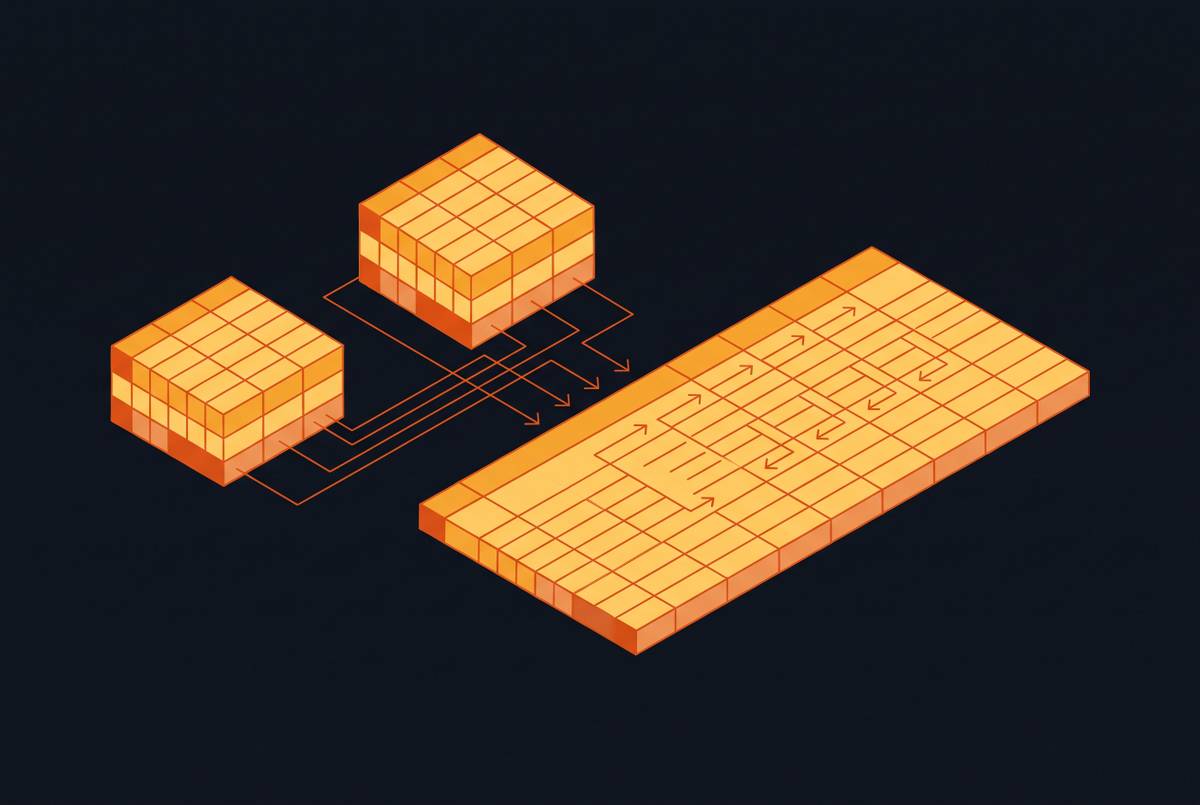
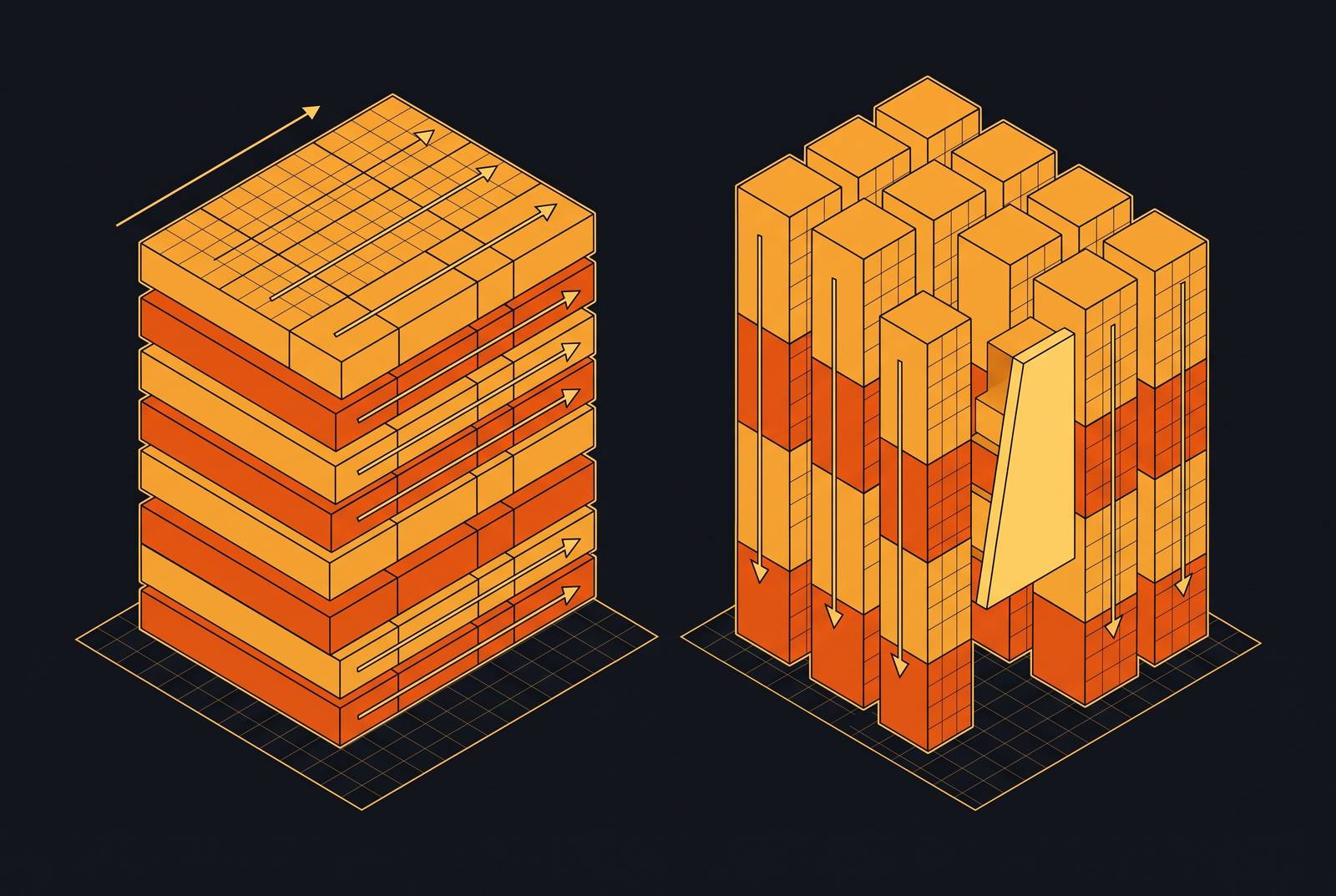
Row-oriented layout stores all fields of a record contiguously. Think of it as [Name1, Country1, Age1][Name2, Country2, Age2]. Fetch a complete record and you read one tight block. That's efficient when you need the whole customer file at once. Columnar layout flips the arrangement: [Name1, Name2, Name3…][Country1, Country2…]. A query touching two columns reads only two column files, no matter how wide the table is.
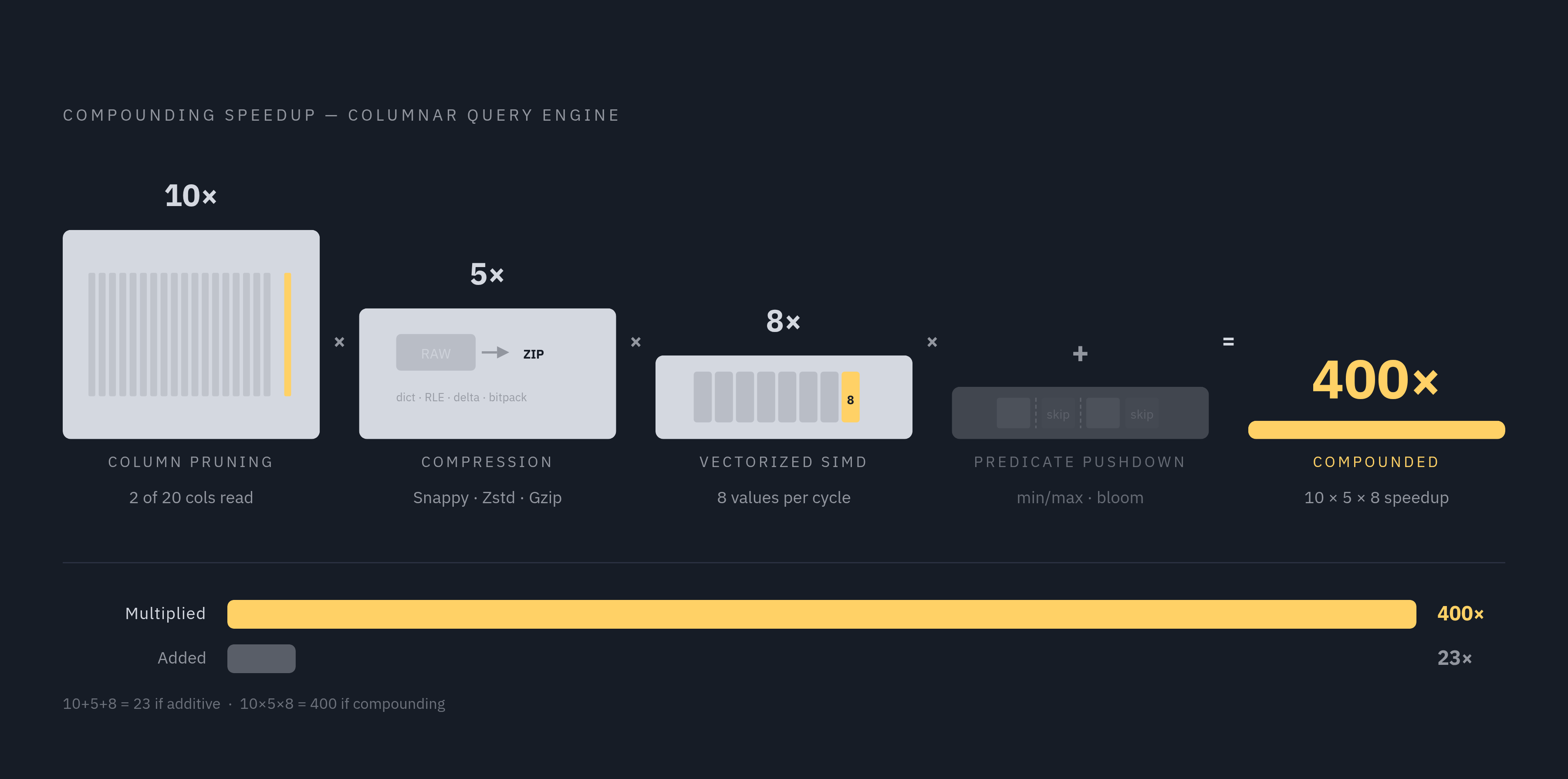
The difference looks minor at the record level. At the workload level it reshapes everything. The first mechanism is column pruning. A query touching 2 columns of a 20-column table skips the other 18 entirely. In a row store, the engine reads every column of every row and discards what it doesn't need. You pay the I/O cost for data you never use.
Compression is the second mechanism. Values in a column share a data type, so they often repeat. Country codes, status flags, timestamps. Dictionary encoding, run-length encoding, delta encoding, and bit packing all exploit that regularity. General-purpose compressors like Snappy, Zstd, and Gzip then squeeze the already-encoded data further. Row stores intermingle data types within each row, so those patterns never form.
Vectorized execution is the third. Values of the same type sit contiguously, so the engine applies one operation to a batch of values as a vector, rather than one row at a time. The old Volcano iterator model processed rows individually. With SIMD, a batch of values can be processed in one instruction. The MonetDB/X100 paper by Boncz, Zukowski, and Nes, which established vectorized execution, won CIDR's Test of Time Award.
It's worth pausing on why these gains compound rather than add. Fewer bytes read through pruning. Smaller bytes through compression. Faster per-byte compute through SIMD. Each multiplies the effect of the others. Predicate pushdown adds a fourth layer: columnar formats store per-chunk metadata, min/max ranges, null counts, bloom filters, that let the engine skip entire chunks without reading them at all.
The practical result? The same data in gzipped CSV can be several times larger than the columnar equivalent. But it comes with conditions.
Why the three compounding effects only materialize for specific access patterns
The structural advantages of columnar storage are not universal. They depend entirely on whether the access pattern is shaped to exploit them. What gets underestimated is how tightly those wins are coupled to access shape.
The pattern that unlocks the gains has a name: "many rows, few columns." SUM(revenue) GROUP BY region over millions of rows. Time-series aggregations. Cohort analyses. Reporting queries that touch 3 to 5 columns of a 50-column fact table. These queries lean into pruning, compression, and vectorization simultaneously.
Now consider the opposite shape: "one row, many columns." Fetching a complete customer record by primary key. Updating a single order. Any workload that must reconstruct full rows. Here row-oriented storage often remains the better choice. A columnar engine retrieving all fields of one record must read from every column file and assemble the row. More I/O, more assembly work. A row store fetches one contiguous block and is done.
Write cost is the structural tradeoff. A row store touches one localized block. The same architecture that makes reads fast makes transactional writes expensive.
A few conditions erode the columnar advantage further. The engine reads everything anyway, and you lose the first compounding layer. If compression and SIMD don't cover the gap, you're left with a layout that costs more on writes and gains nothing on reads.
That raises the right framing question. Not "is columnar faster?" but "is the workload mostly analytical in shape?" If so, pruning, compression, and vectorized execution usually give you a clear gain. If your workload is analytical with many-row, few-column queries over large time-series or fact tables, the structural advantages compound decisively. If the pattern isn't there, the format adds complexity without payoff.
How schema design determines whether a columnar engine's physical layout delivers or squanders those gains
With the right access pattern, schema design is the single biggest determinant of whether a columnar engine delivers its theoretical gains. It's how sorting keys, partition schemes, and data types align with the queries the system will run. A concrete antipattern makes the stakes immediate. Place a high-cardinality UUID first in the ORDER BY key, and the sparse index becomes nearly useless. The correct design puts filter dimensions first, event_type, user_id, event_time, and partitions by time.
The payoff of correct alignment compounds. A time-based partition scheme lets the engine skip entire partitions for queries bounded by a date range. That layers with column pruning.
Data type choices affect compression directly. A column of low-cardinality strings, country codes, status flags, compresses dramatically under dictionary encoding. Timestamps compress under delta encoding. Pick the narrowest correct type, a UInt32 instead of a String for an enumerated field, and you cut both storage and I/O. They are the compression lever you control before any query runs.
Modern columnar systems have extended schema flexibility to handle semi-structured data. Apache Doris's VARIANT data type automatically sub-columnarizes frequent JSON paths while handling sparse fields efficiently. The main claim is simpler.
Two teams on identical hardware and software, with the same data, can see order-of-magnitude performance gaps from schema decisions alone. Schema is not a one-time setup. It is the primary ongoing performance lever. Which makes the next question sharper: where does even good schema design stop helping?
Where columnar engines hit architectural limits that schema design cannot fix
Write amplification hits first at high-ingest, high-update rates. The architecture that makes reads fast makes updates expensive at scale. No sorting key or data type choice undoes that.
Point-lookup latency is the second ceiling. Customer-facing workloads that require sub-millisecond retrieval of individual records expose the row-assembly cost inherent in columnar storage. Reading from every column file to reconstruct one row is structurally slower than fetching one contiguous block. Apache Doris takes exactly this approach, supporting 30,000+ queries per second for point lookups alongside sub-second analytical queries. But that's an architectural addition, not a schema fix.
Then there's the S3-routing problem. Many managed columnar systems keep their primary data in object storage, so queries have to go through S3. ObsessionDB and similar managed services use columnar storage with a cache-mesh that keeps hot data in memory, and that is how they hold flat sub-second latency even at hundreds of terabytes.
The hidden cost structure of S3-backed architectures is poorly understood. Storage costs look low per GB. But PUT, COPY, POST, and LIST request fees accumulate at high write rates, and egress compounds further. Small-file problems in data lake architectures, many small Parquet and Iceberg files, create excessive request overhead that compaction must continuously address. That compaction burden is ongoing operational work. If you don't manage it, small-file proliferation degrades both query performance and cost.
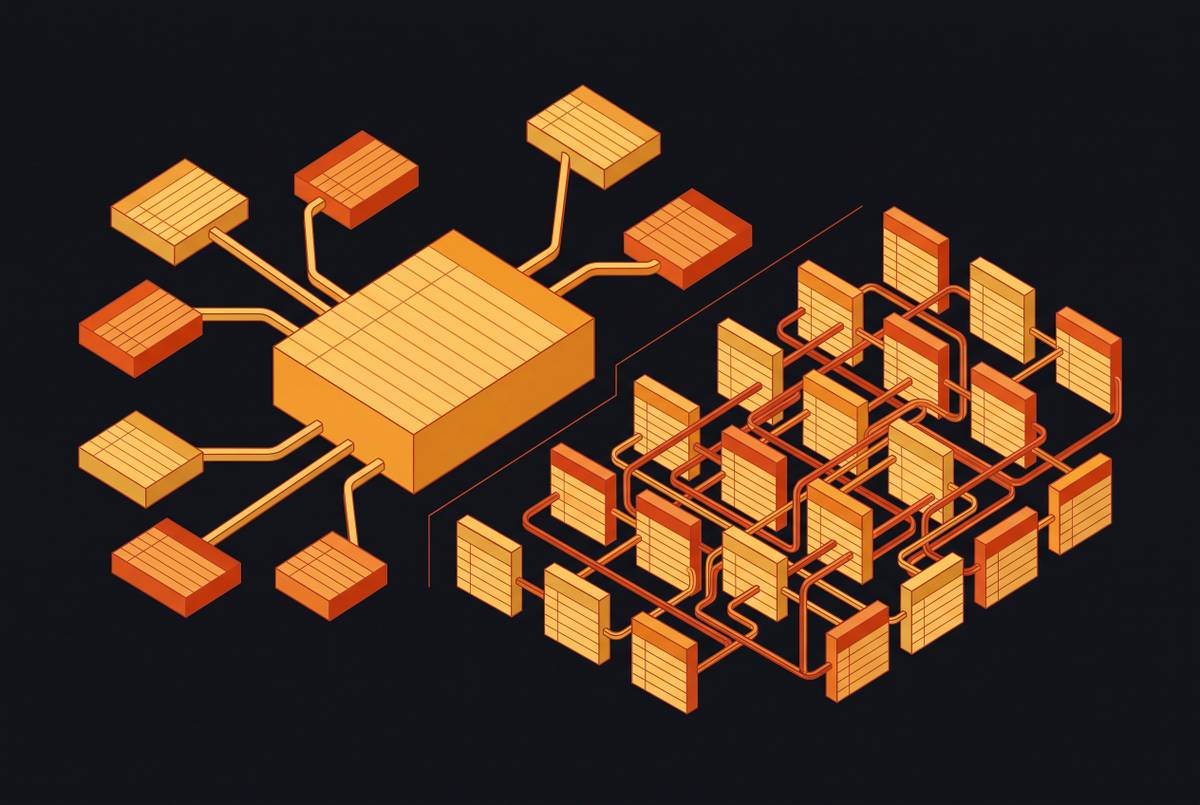
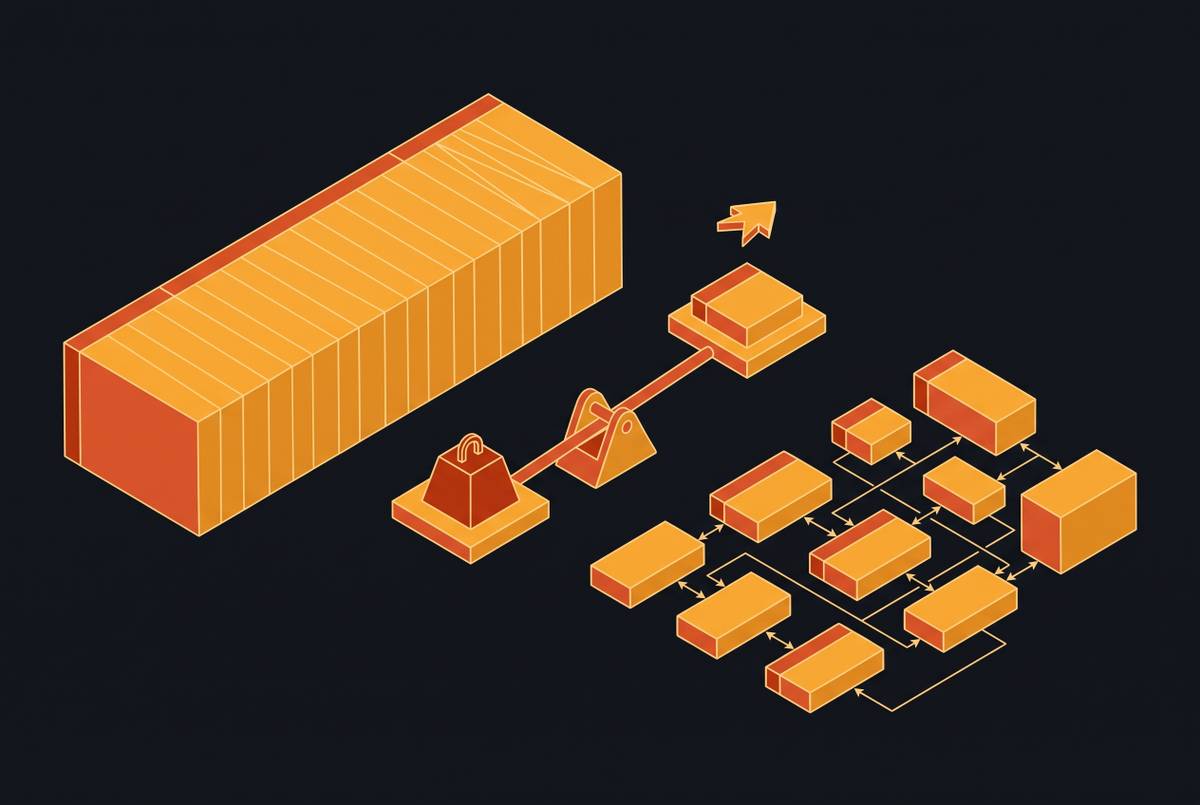
For workloads that require low-latency point lookups and aggregate analytics simultaneously, a single columnar system is often not the production answer. A purpose-stratified architecture, row store for OLTP, columnar for OLAP, streaming sync between them, is increasingly the production pattern. The limits are real, and they set up the workload mapping that follows.
How different real-world workloads map onto the row-columnar tradeoff
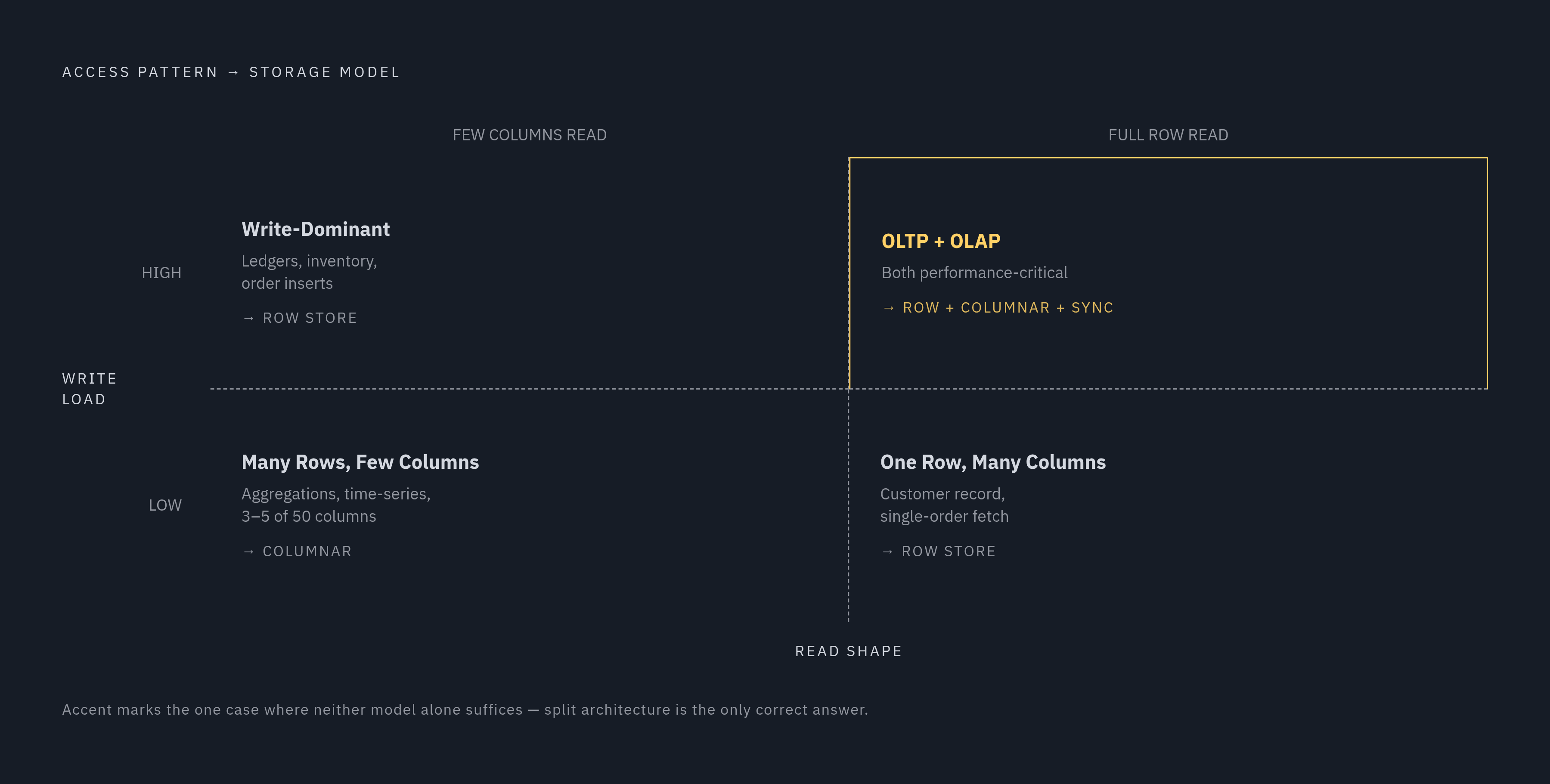
Mapping workload shape to storage model is the operative skill. Most real workloads are not purely one or the other, so the decision is about fit on the dominant access pattern, not a binary choice. Columnar clearly wins for historical and time-series analysis. Large datasets queried over time ranges with tight column selection. Partition pruning by time and column pruning compound, so you can skip most of the stored data. Real-time risk and fraud analytics also fit: millisecond-latency aggregation over recent transaction windows, where columnar engines with in-memory hot-data tiers outperform row stores.
Row-oriented storage wins where writes dominate. Banking ledgers, order processing, inventory updates. Row stores can handle thousands of small inserts or updates per second with low latency. Columnar stores pay write-amplification costs. Full-record retrieval by primary key also favors row storage. CRM lookups, user-profile fetches, order-detail views. One row, many columns, where a row store fetches one contiguous block versus columnar's multi-file assembly. The same goes for ACID-transactional workloads that need row-level locking and point-in-time recovery.
You get a hybrid answer only when both patterns are frequent and both are performance-critical. You separate a row store from a columnar system with a streaming sync between them, rather than forcing one engine to serve both equally well. The decision criterion remains: identify the dominant access pattern and optimize for it.
AI agent workloads introduce a structurally different demand. Schema optimization for agents is model-dependent. S3-routed architectures serve it slowly. The architectural implications go beyond storage layout alone.
What to look for in a managed columnar service given these architectural tradeoffs
The gaps a managed columnar service must close are specific. S3-routing latency at scale. Compaction overhead. Write-amplification management. Accountable agent access.
ObsessionDB prices on compute hours, not per query. That means high-curiosity workloads, whether human analysts running exploratory queries or AI agents probing data in parallel, are never penalized for asking more questions. Agents get isolated, read-only compute over shared data. Every query is logged in full. Sandboxed branches let agents experiment against real data without touching production. Migration is handled as an engineered project with benchmarks, not a documentation exercise the customer does alone. The fit is real-time analytics platforms, observability pipelines, risk engines, and AI agent workloads that probe data at high volume.
Apache Doris is a strong self-hosted option. An open-source real-time analytical database with an MPP vectorized query engine, streaming ingestion, sub-second queries, lakehouse integration with Iceberg and Delta Lake, and hybrid row-column storage for high-throughput point lookups alongside analytical scans. Teams with infrastructure capacity can run it themselves without a managed layer.
A few evaluation criteria apply across any managed columnar service. Whether hot data is cached in fast local storage or every query routes through object storage, that determines whether latency stays flat as data grows. How compaction is managed, as the customer's operational burden or the service's responsibility. Pricing model: per-query pricing taxes high-curiosity workloads, compute-hour pricing does not. Agent access controls: read-only isolation, full query logging, and sandboxed branches are not optional for production AI workloads. And benchmark transparency: latency and cost claims should be reproducible on identical workloads, not marketing-grade summaries.
The access-pattern test every team should run before committing to a storage architecture
The right storage architecture is not chosen from a feature matrix. It's derived from a disciplined characterization of the actual access pattern. That characterization is more tractable than most teams assume.
Start by characterizing the dominant query shape. What fraction of queries are "many rows, few columns" aggregations versus "one row, many columns" lookups versus full-record writes? If the majority are analytical aggregations over large row counts, columnar is structurally favored. Then measure column selectivity. What share of the table width does a query touch, on average? The lower that ratio, the larger the column-pruning gain.
Audit write patterns next. How frequently does the workload perform single-row updates versus batch inserts? High-frequency single-row updates signal that columnar write-amplification will erode gains. Batch-append patterns are compatible with columnar architecture. Identify mixed-pattern workloads explicitly. If you see both OLTP and OLAP patterns and both are performance-critical, separate the architectures from the start instead of tuning one engine to serve both.
Then account for agent access. If AI agents will query the system, characterize whether they aggregate tightly, SQL-heavy and columnar-friendly, or fetch broad result sets, wide-column pulls that are less columnar-friendly. That tells you if a schema built for human analysts works for agents or needs separate optimization.
Schema design follows access-pattern characterization, not the reverse. Choose the sorting key, partition scheme, and data types to align with the dominant query shape from the first three steps. If you treat columnar as the default for any analytics workload and skip this characterization, you will hit the write-amplification, point-lookup, and S3-routing costs described above.