Sandboxed Branch Environments for AI Agent Data Experimentation
Agents need isolated data environments to explore safely without risking production.
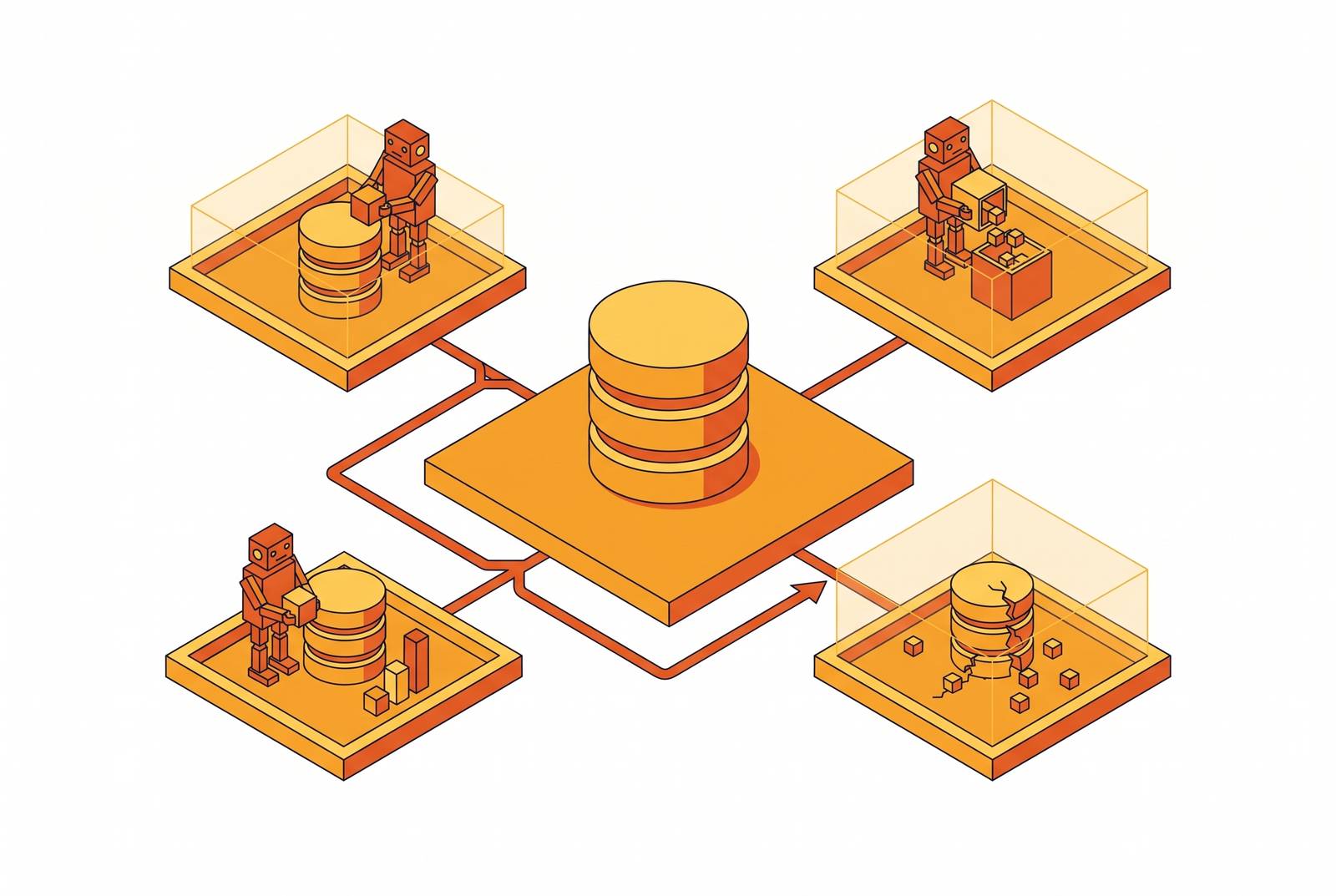
Sandboxed branch environments let AI agents try things out with production-fidelity data without changing production state. The key is not duplicating datasets, but giving each agent an isolated metadata view over shared physical storage. That design makes aggressive exploration practical, provided the surrounding stack also isolates compute, authorizes actions before execution, and records what happened.
Why production data is the wrong environment for agents to think in
An agent inspects a schema, generates a query, studies the result, and tries again. A failed query can trigger more exploration. A promising result can lead to intermediate writes, another hypothesis, and another round of queries. Across dozens of steps, a single task becomes a cascade of database work. Production has to absorb that work while continuing to serve everyone else.
The problem begins with performance and correctness. Human analysts generally make deliberate requests, while agents can over-explore a catalog, retry generated queries, and accumulate changes as they reason. A slightly different system prompt can turn exploration into deletion, or cause writes through a connection still pointed at production. At fleet scale, a faulty assumption can propagate across a dataset before a human can intervene.
Yet unrealistic data weakens the agent’s work. Ramp’s internal Inspect agent keeps agent compute apart from production data while still using realistic tools including Vite, Postgres, and Temporal. The task needs a credible working environment. It does not need the ability to alter live state while deciding what to do.
Why the standard mitigations — staging environments and read-only replicas — don't hold at agent scale
Staging keeps work separate, but people usually share it and keep it around for a long time. It drifts from production as other users change it. Concurrent agents then inherit each other’s mutations, and resetting the environment between runs disrupts everyone else.
A read-only replica removes writes from that picture, but leaves query contention intact. One agent’s scan still competes with every other query. Dense reasoning-loop traffic can saturate the replica even when every statement is permitted. Compute isolation and data isolation are separate problems, so moving an agent into a container does not, by itself, give it an independent data environment.
Physical copying supplies that independence at a different cost. Each run must wait for a copy and pay for its storage, while continuous ingestion makes keeping the copy current difficult. These approaches each solve part of the problem. None lets agents start fresh, make their own changes, and create environments cheaply enough to keep up with their tasks.
What zero-copy branching actually is at the storage layer
A zero-copy branch resembles a git branch in one useful respect. Creating it establishes a separate line of work without duplicating everything already present. At the storage layer, that means an isolated metadata view over shared physical storage. The agent sees a complete dataset, but branch creation moves no data bytes.
The mechanism is copy-on-write at the metadata layer. A new branch records a pointer to the parent snapshot, and both views share physical blocks until their state diverges. Only a changed block is written into the branch’s own namespace. Production remains outside that write’s scope because the storage layer, rather than an application guard, enforces the boundary.
Creation is therefore an O(1) metadata operation regardless of dataset size. A petabyte-scale dataset does not require a longer copying process than a gigabyte-scale one. The branch shows production as it was when the branch was created and does not refresh as production changes. That distinction makes it a stable starting point for a task. When the run ends, the branch can be decommissioned, with additional data storage limited to the delta written during the run.
How Chronos generalizes branching across heterogeneous data stores
Single-store branching is not enough when an agent’s task spans relational records, vector data, documents, and files. The state in its branch needs to be consistent across those stores. Otherwise, isolating one database leaves the rest of the task working against a different boundary. Branching needs to extend across those stores without rebuilding each storage engine.
The MIT DB Group’s September 2026 Chronos paper presents a bolt-on system for that purpose. Chronos uses compact interval-based versioning and simple query rewriting to support branching and data sharing. Its implementations cover PostgreSQL, SQLite, DuckDB, Qdrant, and a database-backed filesystem. Branch management is separate from each store’s data path, so that management layer does not sit in the query hot path or add latency to normal reads.
The paper reports tree-search-style speculative exploration running up to 16.7× faster than existing approaches. That benchmark fits the workload under discussion. Agents exploring several candidate paths need branching to be part of the reasoning loop. Chronos is deployed at CERN’s CMS Computing Operations as a storage layer for agent knowledge, data sandboxing, and ingestion staging.
What agents can do inside a branch that they cannot safely do against production
Within authorized access, an agent can write partial results, update schema, or run a destructive query to test a hypothesis. Those operations let it investigate how data behaves under a proposed change.
The same freedom extends to competing approaches. An agent can open a branch for each candidate path, run those paths concurrently, and compare their outcomes. Unproductive branches can be discarded, while a validated result can be reviewed for a merge. This is the multi-path exploration pattern measured by Chronos, expressed as an ordinary task lifecycle.
A fresh branch also gives the agent production-scale data from the moment of creation. That starting point is useful for analysis of continuously ingesting datasets, even though the branch is not a live feed. Schema exploration can happen there too, without repeatedly probing the production catalog. For development teams, the resulting shift is practical. Agents can be exercised aggressively against controlled inputs, their changes inspected, and their behavior refined before useful work is allowed back into production.
Why S3-routed architectures make agent branching economically hostile
Metadata lets agents skip the first copy, but they still read data throughout their reasoning loops. In an architecture that routes every read through S3, high-frequency exploration generates GET request charges on top of storage costs. When those reads move data from object storage to compute and egress billing applies, the same loop also adds transfer charges.
An agent may write intermediate results and discard them when a candidate path fails. Some object storage providers apply minimum storage duration policies, so those writes can be billed for longer than the branch exists. Ephemeral state is not necessarily ephemeral spending.
At fleet scale, concurrent sessions multiply these request and transfer costs precisely when fast branching becomes most useful. S3 can serve the durability role, while branch reads stay in a memory or NVMe cache tier. Zero-copy describes how a branch starts. Whether that branch is economical throughout a task depends on where the repeated I/O goes.
Authorization before the tool call, not after the damage
A branch defines the data state an agent can change, but does not authorize every action available to it. The agent might invoke an inappropriate tool or delegate to a sub-agent that reaches outside the branch. Deciding whether either action is permitted requires an enforcement point before execution.
Uchibeke of APort Technologies’ March 2026 paper, Before the Tool Call, backs this up with tests. In its adversarial testbed, social engineering worked against the model in nearly three quarters of attempts to get it to authorize actions under a permissive policy. With a restrictive deterministic policy, the same class of attacks had a zero percent success rate. The finding supports pre-action enforcement rather than treating model alignment or retrospective evaluation as substitutes for authorization.
OAP intercepts tool calls synchronously, evaluates declarative policy, and produces a cryptographically signed audit record. It is a concrete implementation of the companion primitive branches need. For a sandboxed branch stack, the lesson is to provide isolated, read-only compute access by default. Explicit policy rules can then control which writes are allowed, and each authorization outcome is recorded.
Full auditability as a non-negotiable property of agentic branch access
An autonomous agent must still answer for what it does inside a sandbox. Isolation limits what actions affect, and authorization limits what actions are allowed, but neither alone tells what happened during a run. A complete, queryable log supplies that account. Without it, increasing autonomy also increases the gap between what the agent did and what a team can reconstruct.
Every tool call, query, and schema read should be logged in full. Agent reasoning is non-linear, so an omitted step may be the one that explains a later decision. Tool arguments and responses, the planning trace, state diffs, and per-step timing make the sequence inspectable. The final answer alone cannot show where a query plan diverged or which intermediate result sent the agent down an unproductive path.
That same trace supports governance by showing what data the agent accessed, when, and under which policy. Signed authorization records add evidence of both permitted and denied actions beyond a mutable application log. Debugging and compliance therefore depend on much of the same record. With the full trace available, teams can reproduce failure modes and iterate on agent behavior with confidence.
MCP as the control plane that makes branch operations agent-native
People still have to manage branching if someone must set up the environment outside each agent session. MCP makes those operations available as structured tool calls. Anthropic introduced the open standard in late 2024, and it is now a Linux Foundation project under the Agentic AI Foundation. Its July 28, 2026 specification provides the protocol context for agent access to tools, schema, and data.
Structured access gives an agent real database information before it generates SQL. It can inspect table names, column names, data types, primary keys, and constraints. The control plane becomes part of the reasoning loop. Chronos exposes optional MCP tools for branch, SQL, diff, merge, and filesystem operations, allowing branch work to proceed within a single tool-calling session.
That session can encompass creation, speculative queries, inspection of changes, and a decision to merge or discard. The read-only default still applies. A dedicated role with read-only permissions is the appropriate default for agent MCP connections, while explicit branch-scoped tools gate writes. The agent can then inspect output, adjust a query, and re-execute within its branch, subject to the same authorization boundary throughout.
What a complete sandboxed branch stack looks like in practice
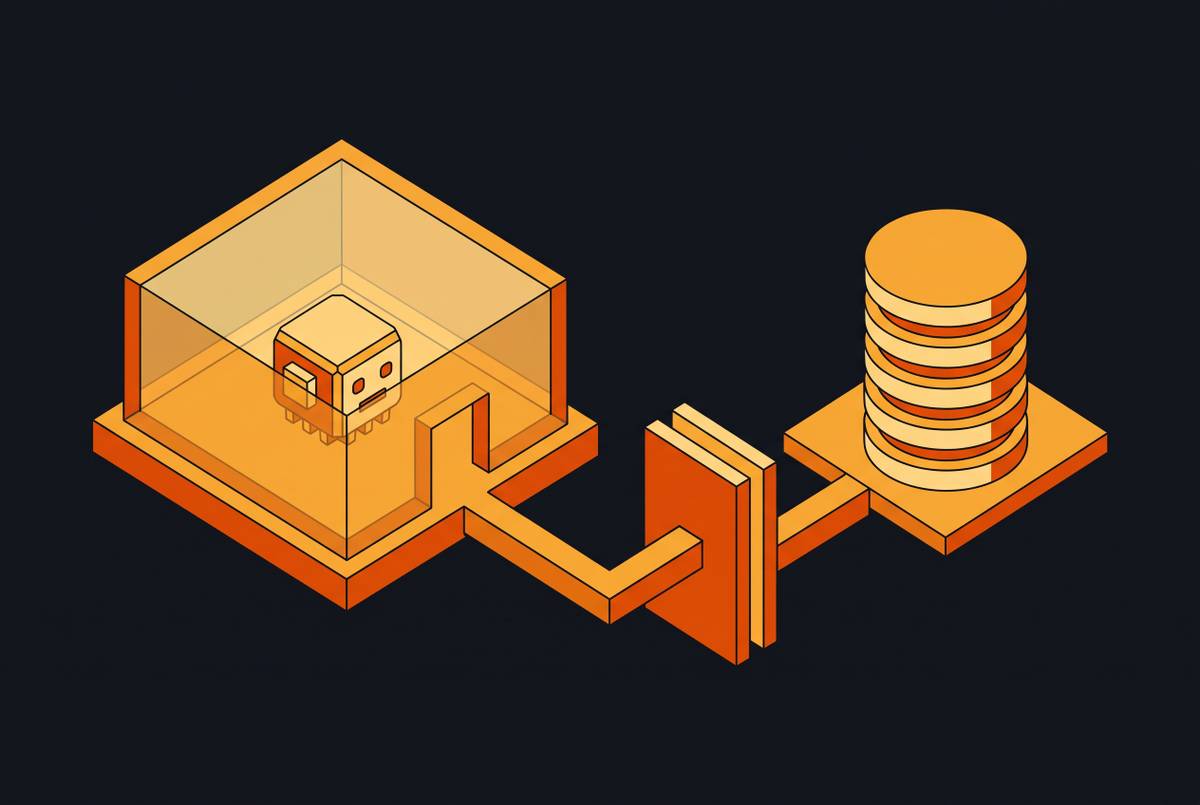
A production-ready stack combines four distinct layers, namely compute isolation, zero-copy data isolation, pre-action authorization, and full audit logging. Each closes a different gap. Containers or microVMs separate agent execution from the primary database cluster, while a per-session branch isolates the data state. Compute separation must be paired with an isolated data-serving path, because a separate process that still queries shared production capacity leaves contention unresolved.
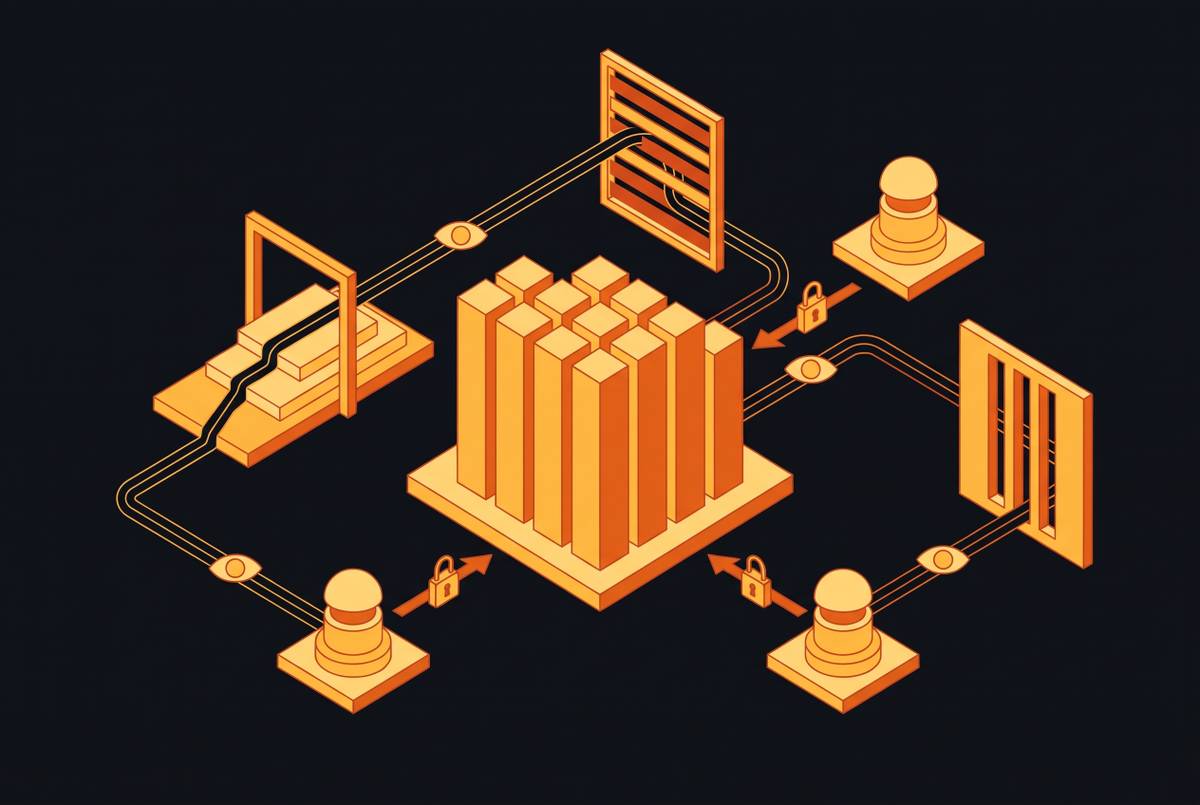
When a task starts, branch creation gives it a production-fidelity starting state and a namespace for its changes. Every tool call after that is checked against deterministic policy before it runs, and a signed record is made whether access is allowed or denied. Queries, schema reads, and tool activity are logged in full and indexed by session and branch. For OLAP-heavy work, including real-time analytics, observability pipelines, and risk engines, the hot read path stays in memory or NVMe.
At the end of the task, results are reviewed and optionally merged, and the branch is discarded. A later task receives a new starting view instead of inheriting mutations from a long-lived shared staging environment. The agent’s freedom to experiment is therefore bounded by storage, policy, and a recoverable record of its actions. Production is no longer the workspace in which the agent has to think.