Full Query Logging Requirements for AI Agents in Regulated OLAP Environments
Regulated industries now must log every step AI agents take in databases, not just the final answer.
Full query logging for AI agents in regulated OLAP environments is an accountability requirement. Meeting it takes more than saving SQL statements or conversations. The record must capture the complete action chain, reveal tampering, support reconstruction and survive for the required retention period, without exposing sensitive data or disrupting the system it audits.
Why regulated industries can no longer treat agent query logging as an engineering preference
The August 2026 enforcement window makes the EU AI Act a concrete planning concern, but it is not a blanket deadline for every high-risk system. The Digital Omnibus on AI deferred compliance for standalone high-risk systems. That distinction is important when setting an implementation schedule. It does not, however, remove the existing sector obligations that already make automated actions subject to scrutiny.
SEC Rule 17a-4 and FINRA establish multi-year retention obligations, while HIPAA requires six years specifically for covered documentation. US model-risk guidance SR 26-2 superseded SR 11-7 in April 2026 and expects documentation of model behavior and decisions. These obligations reach beyond the conversation itself. An agent that acts on model output may query data, hand off work and change a backend system before it replies.
China's National Technical Committee 260 AI Safety and Governance Framework 2.0 also recommends keeping operational logs for large model services that record what the system and its users do. It is soft-law guidance. For multinational teams, the obligations therefore differ in legal force and scope. Can the organization reconstruct what its agent actually did?
How AI agents use databases differently from humans, and why that changes what logging must capture
An agent treats a database as a node in a search tree. It receives a goal, selects a tool, evaluates the result and decides what context it needs next. Each result can reshape the next request. A session record may show the queries without preserving the links between them.
Three patterns make that distinction concrete. Compression summarizes many rows in one pass, expansion branches into sub-queries, and recursion returns to the same tables as context evolves. Concurrent agents can produce unpredictable activity spikes even when each query looks ordinary. Yet volume is not the strongest argument for logging. Schema changes, mass updates, privilege changes and data movement can happen at machine speed, with consequences that may be irreversible.
It is fair to argue that newer models may get the answer right in fewer turns. That would reduce query traffic, but not accountability. One unlogged write still leaves an organization unable to explain a consequential action. The examination concerns the lookup, risk check and backend write beneath the conversation, regardless of how efficiently the agent reached its answer.
The four technical properties a compliant agent query log must have
Complete action-chain capture means keeping a record of every action that ran, in the order it ran, including failed calls and retries. Tool invocations, backend writes, messages and escalations belong in the same trail. Reads belong there too, because accessing regulated data is itself an event. The record must also preserve the available decision rationale and guardrail outcomes, including checks that passed, changed behavior or blocked execution. A successful final response cannot stand in for those steps.
Tamper-evidence requires a trail whose alteration cannot pass unnoticed. The agent must not control its own evidence. Append-only or immutable storage, access controls and change history make that separation defensible. SOC 2 Type II covers logging and change-management controls, but does not prescribe immutability by name. WORM storage is an optional, recommended implementation approach.
Replayability means reconstructing a past interaction step by step, including the model version, knowledge and guardrails in force. Retention alone does not make that possible. Durable retention must also meet the rules that apply to the type of operation. Full payloads for destructive operations should be kept longest, commonly around 400 days to meet enterprise security-log requirements or longer under sector rules, while read-only payloads may be truncated or sampled after a shorter window. That distinction concerns payload depth while preserving the requirement to retain the action chain.
What default logging setups miss and why they fail under examination
A setup built around the transcript often looks complete until someone asks how a ticket was resolved. The conversation is present, but the lookup, policy check and write are absent or disconnected. The model decided,” stands in for a recorded rationale. If no deterministic check stood between model output and execution, the record may also lack any evidence that the action was permitted. These are gaps in accountability.
Fragmentation creates a different version of the same problem. Query logs, model outputs and tool calls may all exist, yet reconstructing their sequence requires forensic work across systems never designed to be read together. Sampling can remove the very invocation that is being reviewed. Even a technically complete record can fail operationally if an auditor needs a data-science query to interpret it.
Logging every raw prompt is not a safe shortcut. Full prompts and tool payloads can spread secrets and personally identifiable information through the telemetry pipeline. The archive may then expose the same sensitive data the controls were meant to protect. Completeness therefore requires a deliberate schema.
A logging schema that covers the four required properties without creating new exposure
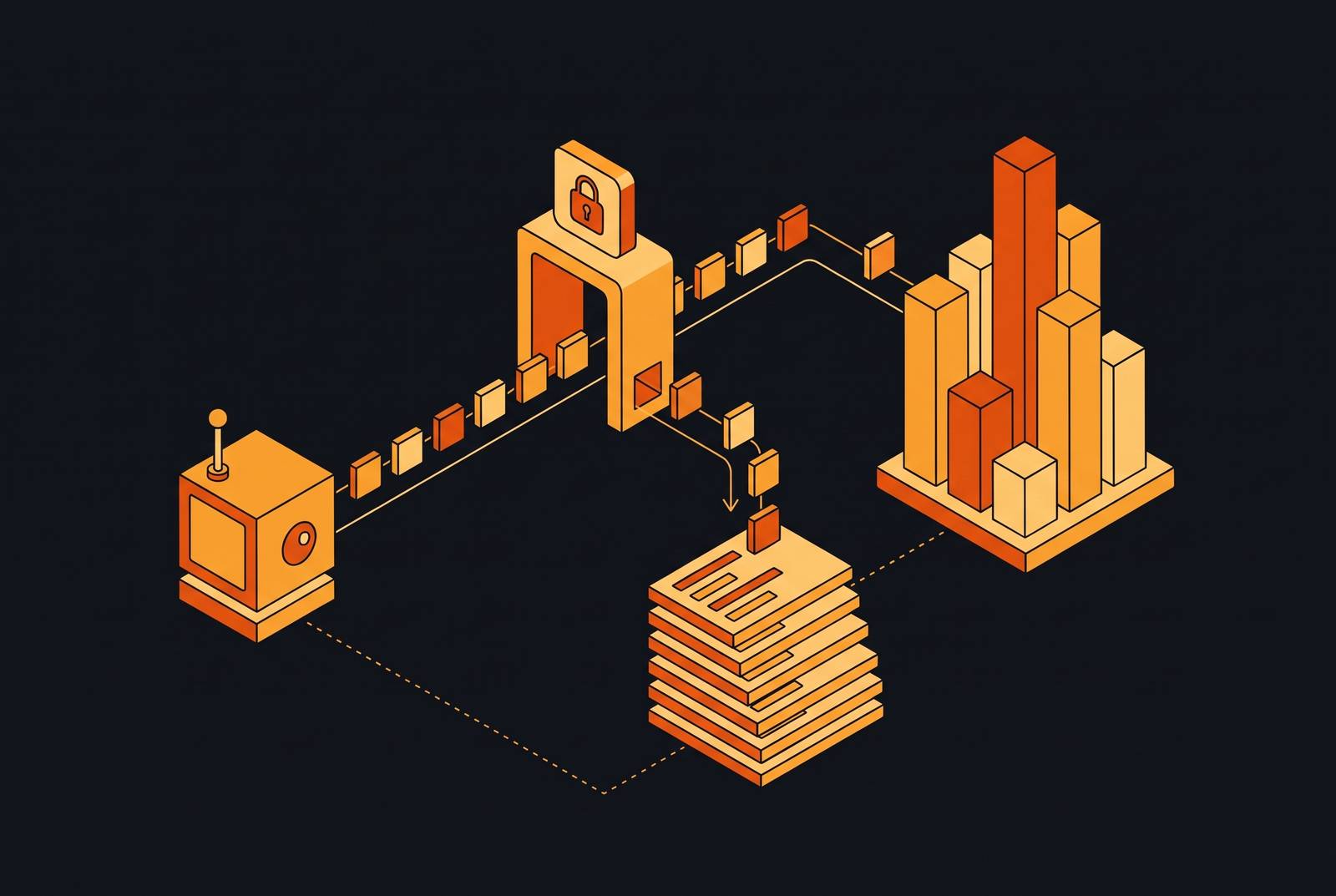
The engineering response is to use the tool-boundary event as the atomic record and the agent run as a distributed trace. Stable IDs should connect spans for planning, reasoning, tool invocation, retrieval and retries, allowing reconstruction from any span. Each invocation needs four artifacts, namely intent, serialized request, response and execution metadata. Intent records which tool was chosen and any available rationale, while responses include errors and truncations. Execution metadata remains mandatory, including latency, exit codes, identity, tenant context and retry counts.
The default production tier should hold metadata. Its fields include agent identity, connection key, query fingerprint, timestamp, operation type, affected tables, latency and error codes. Full prompt and tool content should be opt-in, kept for only a short time, access-controlled and aggressively redacted, except when destructive-operation retention requires more of the payload to be kept. Tool input and output should use allowlists, with redaction in both the SDK and collector. Aligning fields with OpenTelemetry gen_ai.* and mcp.* semantic conventions can reduce later migration work.
Operation type should determine the retention class. Destructive-operation compliance entries must never be sampled, while read-only payloads can become eligible for sampling or truncation after their shorter window. Optional diagnostic capture can use head-based sampling and tail selection for failures, retries, high cost or stuck loops, as long as it keeps all required action records. Append-only writes must come from a logging path the agent cannot edit. The store's access controls and change history complete the protection around the schema.
MCP as the natural enforcement point for attribution, least-privilege, and immutable log writes
Model Context Protocol, or MCP, is an open standard created by Anthropic in November 2024 that connects agents to external systems through a client-server architecture. When every agent query goes through an MCP server before it reaches the OLAP engine, that server is a natural place to enforce the rules. Attribution can be attached before execution. The server can record the agent, connection key, scoped credential and timestamp through a separate, protected logging path.
That position also makes least privilege enforceable. Per-connection keys can map to specific databases using scoped credentials, with read-only SQL guards as the default. Killing a key provides immediate revocation. This kill-switch helps meet the EU AI Act's Article 14 human oversight requirement. Structured commands for describing, validating and deploying changes can also expose intent that a raw connection string would not provide.
The objection is serious, however, because the gateway becomes a privileged attack surface. Documented MCP risks include malicious code execution, remote access, credential theft and authentication, authorization and auditing gaps. The gateway therefore needs its own hardening, audit and failover arrangements. Sidecar or eBPF capture can watch what happens with low overhead, but a gateway is still needed to block calls before they run, even though it adds latency.
How to store the log durably without letting S3 request costs undermine the compliance architecture
S3 can keep write-once compliance archives durably, but its per-GB rate is only part of the bill. GET, PUT and LIST requests, together with egress, can raise realized costs at OLAP query volumes. Investigations add reads to a write path that is already busy. Long-retained destructive-operation payloads deserve particular attention because they may also be the records reviewers repeatedly fetch.
The practical response is a hot, warm and cold architecture. A hot tier on NVMe or an equivalent cache lets investigators read recent records without making S3 GET requests again and again. S3 Standard or Intelligent-Tiering holds warm records that can be read on demand. Glacier Deep Archive suits write-once records that are rarely read and can wait to be retrieved. A Lifecycle policy can move records that fit into that cold tier while keeping their required retention and tamper-evidence properties.
Frequently reviewed records need an access path suited to their use, even when their retention period is long. Routing every investigative query to cold objects defeats that distinction through both delay and request cost. Separating log-query compute from durable storage also allows review capacity to grow independently of the production database.
Isolating agent log workloads from production OLAP traffic to prevent mutual interference
That separation must protect the systems in both directions. Agent log writes and investigative queries should not compete with production analytical traffic, while production workloads must not be able to overwrite or suppress evidence. A shared failure can otherwise damage both the system and the record needed to explain the incident. Isolation is therefore part of the compliance design. It is not simply a performance optimization.
Dedicated read-only compute over the log store gives investigations their own capacity. Agents that need realistic data for experimentation should use sandboxed branches rather than production, with their queries still fully logged. Enforced SQL guards should make read-only access a property of the connection. These controls reduce the chance that an exploratory action becomes a production write.
Multi-step workflows also need to keep durable state at each step. A crash between tool calls, API requests or human approvals can otherwise cause a restarted agent to repeat a write. The trail must distinguish that duplicate from an intentional repeat. Near-zero RPO and fast rollback complement the evidence by supporting recovery. They do not replace the record of what happened.
What an examiner-ready audit trail review actually looks like in practice
An examiner's request concerns a specific decision at a specific time. What data did the agent access, why did it proceed, and which controls governed the action? The record must answer in sequence. A non-engineer should be able to follow the accessed data, available reasoning, ordered tool calls and writes, then see which guardrails stopped or modified behavior. The package must also identify the model version and rules in force at the time.
A chronological trail lets the examiner inspect the decision as a connected event instead of assembling fragments from unrelated systems. Missing rationale forces inference about why an account changed or data was released. When guardrail events are missing, it is unclear whether a check ran. Demonstrable tamper-evidence is equally necessary, because a record that could have been silently edited cannot reliably establish what occurred.
Autonomy does not excuse an organization from explaining its automated actions. A defensible architecture makes those actions attributable and reviewable, with recovery available where a wrong action can be reversed.
Sources
- NovaFabric: Tamper-Evident, Replayable Evidence for Autonomous AI Agent Runs
- Right to History: A Sovereignty Kernel for Verifiable AI Agent Execution
- Supporting Our AI Overlords: Redesigning Data Systems to be Agent-First
- DataSpace: Benchmarking Data Agents for Verifiable Analytics over Heterogeneous Workspaces